Monday, January 08, 2007

Ubuntu: Headed in the Right Direction

Nothing like good news to ring in the new year. Someone on Digg recently noticed that there's a new meta-package in Ubuntu 7.04, Feisty Fawn, that allows users to easily install Macromedia Flash, Sun's Java, MP3 playback support in GStreamer apps (eg. Banshee, Rhythmbox), and Microsoft's core TrueType fonts. There's probably a few other big multimedia codecs that I'm missing that are enabled by this as well.

That's a nifty chunk of the common customizations that Ubuntu users perform, hopefully making the distribution that much easier to use. (Although, hopefully there'll be an obvious way for a new user to install this meta-package, without a priori knowledge.)

I've been noticeably lacking on the Ubuntu news lately, and it's certainly not for a lack of news. Ubuntu's made several steps in the right direction towards making the OS more and more usable:

  • Let's start off with the common customizations that are already in the works. These types of tweaks have the potential to made EasyUbuntu and Automatix a thing of the past.
  • Among those common customizations, a big one is enabling the "universe" and "multiverse" repositories by default. This feature will almost definitely make it into Feisty, if it isn't already. Enabling these repositories by default unlocks a huge amount of software to new users, without them having to mess around with the "Software Sources" interface. (Again, prior knowledge is currently needed.)
  • Feisty Fawn will now use hardware acceleration for it's X server out-of-the-box. This will allow Feisty to run Compiz or Beryl out-of-the-box too. However, the biggest boon for users will be the fact that the official NVIDIA and ATI drivers that enable this acceleration will be installed by default. This saves new users from scrambling to figure out why their beloved OpenGL games all run so slowly.
  • Lastly, the Ubuntu developers are now acknowledging the importance of a so called "bullet proof X server". This means not only providing a useful fall-back for when the X server dies, but also giving the user an easy to use interface for fixing their X server.

Wednesday, December 27, 2006

HOWTO: Griffin Powermate in The GIMP

This Christmas, I was graciously given a slick Griffin Powermate from my brother.


It's a nifty little aluminum knob for your PC, with an extremely smooth touch and a blue LED that makes the bottom glow. There's support in the Linux kernel for the device, and it acts like a regular old input device. If you're crafty, you can edit your xorg.conf to make it control X, or you can use other software's built-in support for the device. Both the free DJ software Mixxx and The Gimp support the device. Mixxx's support needs a bit of work, but the device works great in The Gimp. However, there doesn't seem to be any documentation on how to actually set up the Powermate in The Gimp, so here we go:

1. Edit your ~/.gimp-2.2/controllerrc, and add the following to the end of the file:

(GimpControllerInfo "MIDI"
(enabled yes)
(debug-events yes)
(controller "ControllerLinuxInput"
(device "/dev/input/event2"))
(mapping
(map "button-0" "select-all")
(map "dial-turn-left" "context-tool-select-previous")
(map "dial-turn-right" "context-tool-select-next")))


If you have more than just a keyboard and mouse hooked up to your PC, you might need to change the "/dev/input/event2" to a different device (/dev/input/event3 or something).

2. Set up the permissions
for the Griffin Powermate device (run this in a terminal):

sudo chmod a+r /dev/input/event2

Again, replacing the device with the proper one if your's is different. (Also, see the note at the end of the HOWTO about setting this at bootup.)

3. Fire up The Gimp
and change the mappings in the preferences as you see fit:


4. That's it, enjoy!

There's probably a good way of setting the proper permissions (like in step 2) by default at bootup, but I can't figure it out. If anyone does figure it out, drop me a comment. In the meantime, use your favourite hack to run the command in step 2 at bootup ("/etc/rc.local" is a good enough place). :)

Wednesday, December 20, 2006

PDF + Cube = PDF Cube?


PDF Cube uses the OpenGL API to add spinning cube page transitions to PDF documents

PDF Cube is an OpenGL API-based PDF viewer that adds a compiz/Keynote-like spinning cube trasition effect to your PDF presentations (including Latex, Beamer and Prosper). You can also zoom on 5 predefined areas of any presentation page with a smooth zooming effect.


That pretty much says it all. It's still pretty alpha-quality, but it might be part of a cool solution to the presentation software dilemma some day. If you're interested, check it out.

Thursday, December 14, 2006

GPL kernel modules, reverse DRM, and the future of Linux

I was doing my daily read of Digg today, and I stumbled across this: Linus Torvalds on the "GPL only modules" debate.

The issue at hand is whether the kernel should only be allowed to load GPLed modules (that is, drivers). That's right, some of the Linux kernel developers want to do away completely with binary-only (ie. closed source/proprietary) drivers, like the (good) Nvidia and ATI ones.

On the one hand, Andrew Morton writes:

Give people 12 months warning (time to work out what they're going to do,
talk with the legal dept, etc) then make the kernel load only GPL-tagged
modules.

I think I'd favour that. It would aid those people who are trying to
obtain device specs, and who are persuading organisations to GPL their drivers.

(Whereas the patch which is proposed in this thread hinders those people)


The patch in question would allow more components of drivers to be handled outside of the kernel, thus allowing developers of binary-only drivers (like Nvidia) to write GPLed skeleton drivers that actually just move their proprietary stuff outside of the kernel. So really, it doesn't solve anything, as Linus himself argues:

It will only result in _exactly_ the crap we were just trying to avoid,
namely stupid "shell game" drivers that don't actually help anything at
all, and move code into user space instead.

What was the point again?

Was the point to alienate people by showing how we're less about the
technology than about licenses?

Was the point to show that we think we can extend our reach past derived
work boundaries by just saying so?

The silly thing is, the people who tend to push most for this are the
exact SAME people who say that the RIAA etc should not be able to tell
people what to do with the music copyrights that they own, and that the
DMCA is bad because it puts technical limits over the rights expressly
granted by copyright law.

Doesn't anybody else see that as being hypocritical?


Linus then goes on to argue that decisions in the kernel should be based on technical merit, and shouldn't seek to limit how people are allowed to write/use drivers for Linux.

Because the history of Linux is so deeply intertwined with that of the Open Source/Free Software movement, many people feel that the kernel should only accept GPLed modules. The idea is that this would put pressure on companies like Nvidia and ATI to release GPLed ("Free") drivers. However, the flip-side is that it may well just end up in the same companies simply shunning Linux all together, or just moving their proprietary code out of the kernel. (The only thing the latter case seems to accomplish is a philosophical cleansing of the kernel.) Furthermore, proponents of this approach seem to be ignoring the other important component of "Free" - that is, being able to do what you like with it.


A "Free" kernel should let the user insert any modules they want in it, regardless of the license. It's almost reverse DRM - Instead of restricting users from freely using something, users would instead be restricted to only using something "Freely" (that is, only in ways that are compatible with their definition of "free"). Lastly, it just so happens that allowing binary kernel modules (as is the case currently) is the best technical decision, at least in the short-term, because Linux does not have the consumer base to persuade vendors to release open source drivers. Think about it - Linux is most popular in server market right now, and all of the popular binary drivers (Nvidia, Ati, Wifi) are needed on desktop Linux, not on servers.

Moving forward, the Linux kernel must continue to walk the narrowing line that balances between commercial success and philosophy. The next few years are certainly going to be interesting, particularly if ATI and/or Nvidia open source their drivers. Keep on the look-out.

Saturday, December 09, 2006

HOWTO: Banshee 0.11.3 on Ubuntu

Update: Banshee 0.13.1 can be installed in Ubuntu 7.10 (Gutsy Gibbon) by running "sudo apt-get install banshee".


Banshee 0.11.3 was released today and features a bunch small new features and bug fixes, but also includes some pretty big performance enhancements. If you're a Banshee user, it's definitely worth upgrading to this new release for the speed improvements alone (switching to your library doesn't take a ridiculously long time anymore.) Since I've already written a HOWTO for Banshee 0.11, I decided to updated it for Banshee 0.11.3. This guide was written for Ubuntu 6.10/Edgy Eft, but there's only one little change necessary for it to work on Ubuntu 6.06/Dapper Drake (which is explained inline below.) On with the installation instructions:

:)

IMPORTANT NOTE:
If you have the QuinnStorm repositories enabled (for Compiz/XGL stuff), you might encounter this compile error: "/bin/grep: can't read /usr/lib/libXrender.la: No such file or directory" or something along those lines. The necessary fix can be found here. (I just ended up removing the "/usr/lib/libXrender.la" part of that line and it fixed it, and I think that's probably a safer route.)

To follow this HOWTO, just punch (ie. copy and paste) the commands listed into a terminal. Good luck!

1. Install prerequisites

First, make sure you have the universe repository enabled. If you're unsure, here's instructions on how to check and enable it.
Next, install the software required to build Banshee:

sudo apt-get build-dep banshee
sudo apt-get install libavahi-cil mono libgconf2.0-cil
sudo apt-get build-dep libipoddevice0
sudo apt-get install libgtop2-7 libgtop2-common libgtop2-dev libsgutils1 libsgutils1-dev
wget \http://banshee-project.org/files/libipoddevice/libipoddevice-0.5.2.tar.gz
wget http://banshee-project.org/files/ipod-sharp/ipod-sharp-0.6.2.tar.gz
tar -xvzf libipoddevice-0.5.2.tar.gz
tar -xvzf ipod-sharp-0.6.2.tar.gz


Note: If you're an Ubuntu 6.06/Dapper Drake user, the above "sudo apt-get install..." line might fail. If it does, try running the following:
sudo apt-get install libsgutils libsgutils-dev
(Note: If this fails, just keep going to with the rest of the HOWTO...)

Now, in order to have iPod support, we're going to install libipoddevice and ipod-sharp:

cd libipoddevice-0.5.2
./configure --prefix=/usr
make
sudo make install
cd ..

cd ipod-sharp-0.6.2
./configure --prefix=/usr --disable-docs
make
sudo make install

(The above iPod steps can be safely left out if you don't need iPod support...)

2. Download Banshee 0.11.3

wget http://banshee-project.org/files/banshee/banshee-0.11.3.tar.gz
wget http://www.banshee-project.org/files/banshee-official\
-plugins/banshee-official-plugins-0.11.3.tar.gz

3. Extract and configure

tar -xvzf banshee-0.11.3.tar.gz
tar -xvzf banshee-official-plugins-0.11.3.tar.gz
cd banshee-0.11.3
./configure --prefix=/usr --enable-avahi --disable-docs

I suggest leaving Avahi enabled here as I did so that DAAP sharing works. (It lets you share your music library with iTunes, Limewire, etc. users, as well as listen to other peoples'.) iPod support should be automatically detected if you followed the iPod steps above.

4. Build and install Banshee

make
sudo make install


5. Configure, build, and install the plugins

cd banshee-official-plugins-0.11.3
./configure --prefix=/usr
make
sudo make install


6. Run Banshee!

Either from the console run "banshee" or launch it from the "Applications->Sound & Video" menu in GNOME.


That's it! I've tested this on Ubuntu 6.10/Edgy Eft machine, but if this doesn't work for you, leave a comment and I can try to help you figure it out. :)

Lastly:
Digg!

Thursday, December 07, 2006

3D Album Art in Banshee

Hot on the tail of Apple's Coverflow, Łukasz Wiśniewski is developing a plugin for Banshee called Fleow:


That is hot. (Thanks Gabriel!)

Thursday, November 30, 2006

Ecksdee 0.0.9 Release and Developer Interview

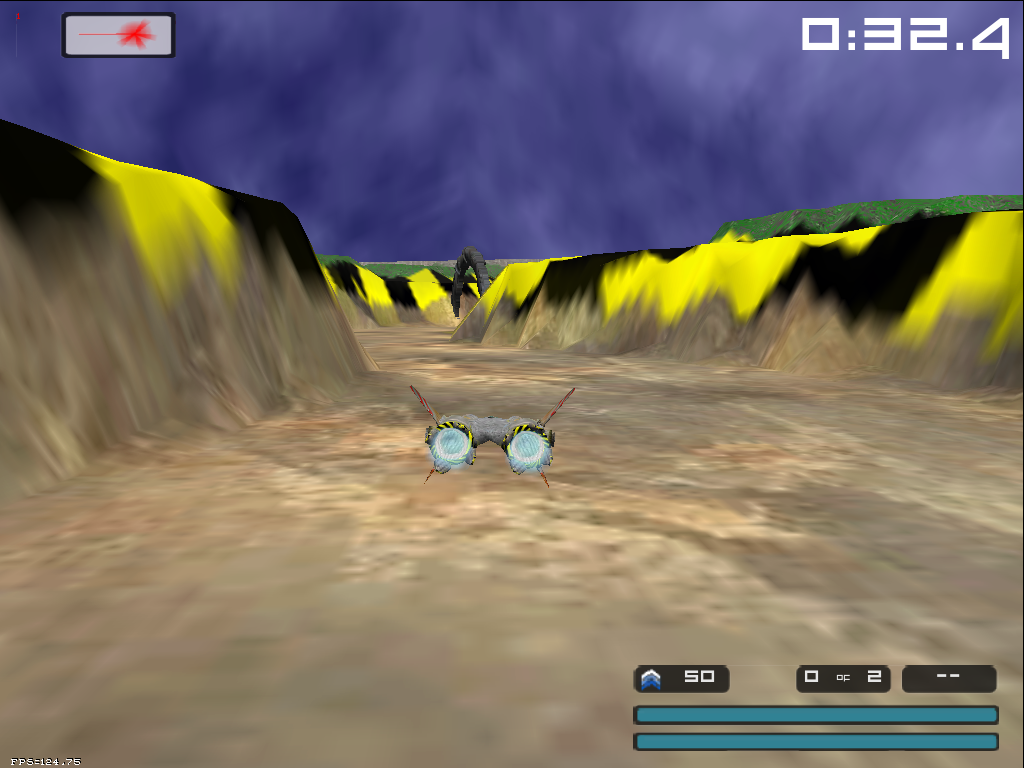
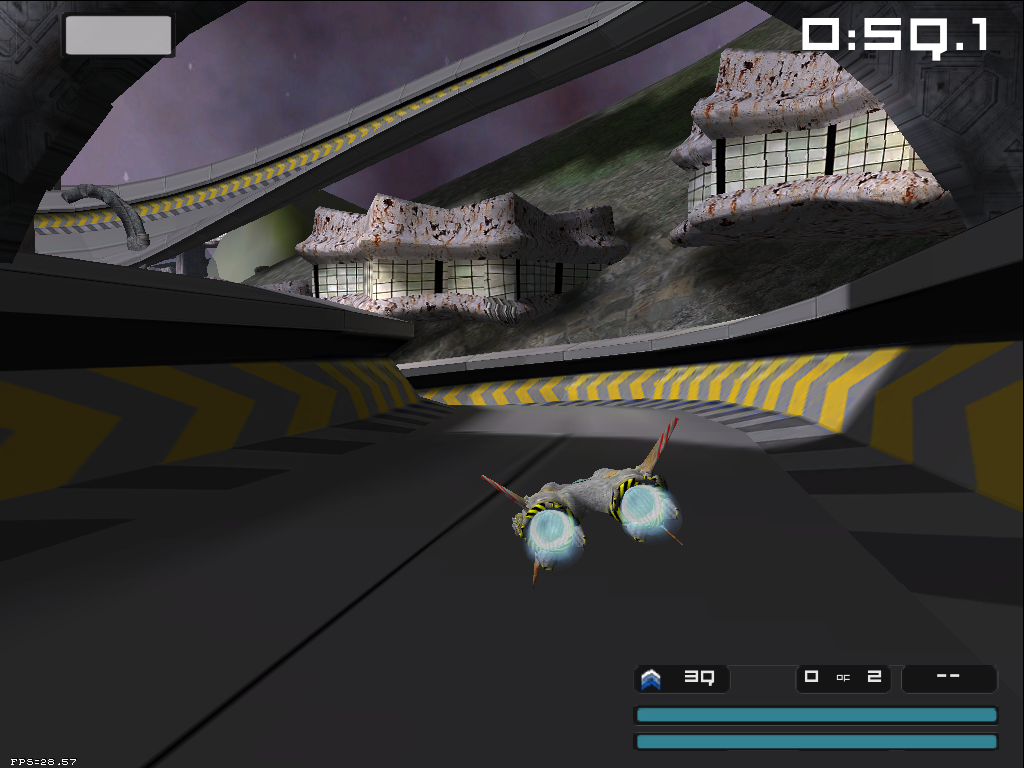
For those of you who remember my Next-Gen Linux Game Roundup, you might recall Ecksdee as one of the games that was highlighted. In the months that have passed, the developers of Ecksdee have been hard at work tweaking and adding new features to the game, which has started to evolve into a playable fast-paced racer. A few days ago, the team released Ecksdee 0.0.9, which features the slick new Ciy map (video) along with some new ships.

With this new release, I had the opportunity to ask two of the Ecksdee developers, Vincent Knecht (vknecht) and Amir Taaki (genjix), a few questions:

Q. What was your original motivation for creating Ecksdee?

VK: I had free time when Amir came up with his hovercraft prototype, and thought it deserved a game project, like XRacer. At that time I was making a visualization application with Crystal Space, and wanted to do something more
fun with CS...

AT: I found myself working with the Crystal Space community, and on a under development game called Crystal Core. Since it was set in the future I imagined some type of hovering vehicle would be useful and began work on a CEL property class for hovering (basically like a kernel module that can be loaded in your game to do stuff). To go with it I made a demo to demonstrate it.

Since Vincent is an active Crystal Space developer, he managed to catch wind of it and started asking questions about the status of it - "Is it a game?", for which I had no ideas about :D Needless to say a week later I got a tarball back with a build system and proper application architecture... This was a great blank canvas to start working from since now everything was properly organised as it should and from there that was real good kick starter. I doubt I ever would've gone at this on my own otherwise.

Nonetheless after some time, the game started to play but looked crap -there were no ships, a poorly designed main menu... Luckily Pascal (who is also a Crystal Core artist), made us all the ships (we've taken some out for this release), the Ciy level and other textures and special effects.

Q. How has your decision to use the Crystal Space engine impacted the development of Ecksdee?

VK: Well, I've be following Crystal Space development and learning it since a few years. When we started, Crystal Core (technical demo for CS) was one of the best source of inspiration to kickstart Ecksdee. So I think Ecksdee wouldn't exist without CS :-)

AT: Very much, all of us come from the Crystal Space community. Using CEL is the biggest help since it simplifies many worked concepts in game development.


Q. What about Python?

VK: Currently, we're using Crystal Entity Layer XML scripting, which is great for simple things. However, we will switch to CEL python scripting to get more control and possibilities. Hopefuly, it will be easier to read and modify too.

Q. You're one of the only open source games that uses Nvidia's Cg Toolkit. How has this enhanced Ecksdee's graphics?

VK: Cg support is actually a Crystal Space feature, so all projects using CS use Cg to some extent. So far, we don't have really specific shaders, and use the ones provided with CS. Afaik, Cg is about shader portability, and is supported by CS since a few years.


Q. Can you tell us more about the Blender integration you're working on? How will it make content development easier?

VK: Basically, it's about having a straightforward way to get Blender models and maps running in the game. Blender and blender2crystal export script are the recommended tools for Ecksdee content creation. There are a couple of HOWTOs in our wiki about that.

AT: Hopefully Ecksdee will become more and more easier to modify in the future. I am also a blender2crystal developer and want to make it easier for people to quickly build levels and ships to make a huge load of quality content rather than developing a game like a traditional closed team.

At the moment you can set a few properties in blender, and click "Run" in the b2cs overlay and just start playing your level. With ships you can make a ship, drag it to a specific directory and the game will automatically show it in the menu.

For those who are interested I encourage them to check out the Blender conference video about Crystal Space, the blender2crystal page and the artists documentation section of our site.

Q. Lastly, what's on the roadmap for Ecksdee in the future?

VK: First there will be some porting from XMLScript to Python, especially for menus and head-up-display handling. Sure, there will be new tracks and ships. We also will look at networking and multiplayer support, though we cannot say now when that will be added.

AT: The addition of python will allow some interesting things like little drones following your ship (as a weapon system) and easier extending of the game for new features and options to the main menu among other things.

~

To wrap up, I'd like to thank Vince and Amir for the time they've both graciously spent on Ecksdee and this interview. Ecksdee is in good hands, and I'm looking forward to the future of the project. Finally, if anyone would like to get involved with Ecksdee (be it artists or coders), the Ecksdee documentation is a good place to start.

Links:

Tuesday, November 21, 2006

Show Ballmer the Money


"Mr. Ballmer, Since you live in a fantasy world, thought we'd pay some fantasy money for your fantasy claim."


I think Tristan Sloughter might be on to something.

If you haven't been following the whole Novell-Microsoft deal, Novell's customers basically get protection from being sued by Microsoft. Microsoft believes that the Linux kernel infringes intellectual property it owns (heard this before?), and that Linux users are liable.

That's right, Microsoft wants you to think it's going to sue you for using Linux. (It's yet to be shown if they actually have a case or not. Many Linux advocates believe they don't.)

In either case, I find it ironic that Novell, who takes a strong stance against proprietary drivers in their kernels, admits that it thinks there's "proprietary" intellectual property in heart of it's Linux distribution, SUSE. That doesn't make very much sense, does it?


Little associated with Microsoft seems to make sense these days...