I just spotted this article over on digg: Open source audio applications need to learn from listeners
After reading the first few paragraphs, I had to ask myself a question: What the heck is the editor talking about?
I understood the opening paragraph, which points out that there's no software (albeit on any operating system) that allows the user to listen to music from any source universally (FM, MP3s, CDs, etc.), but we're basically as close as one could possibly get to having that. It's impossible for both hardware manufacturers (think Sony stereos) and software developers to allow playback from every audio source, so they choose to support the ones you're actually going to use. FM is useful to many people in a stereo, but being able to listen to podcasts in music playback software is something that many people would find much more useful on their PCs than FM radio in the same software.
It really starts to go downhill in the third paragraph:
Only in software applications is this distinction made, and consequently we have to use separate apps to play music from different sources. And the problem is by no means limited to FM broadcasts and MP3 playback. How many of the mature open source audio players support basic CD playback? There are a few that support ripping CD audio directly within the app, but cannot play that audio directly off of the disc. Would anyone in their right mind buy a hardware device with that kind of limitation?
This is
exactly the kind of writing that hurts the Linux community - Uninformed writing. The editor of the article obviously hasn't actually tried any "mature open source audio players" in the past few years. Last time I checked, XMMS has been able to playback CDs for a
long time.
In addition, Rhythmbox, Banshee, and AmaroK can
all playback CDs, MP3s/OGGs/whatever, received podcasts, and have support for cool extras like
last.fm.
Once again, what the hell is the editor talking about?
Building an application from a data-task perspective locks out the possibility of new features, yet history teaches us that there will constantly be new methods and approaches to delivering audio to listeners. CDs, audio files, streaming radio, DAAP sharing, FM, XM, podcasting -- the list goes on. How many new ones will be invented this year?
...and if the editor had actually tried any of the mature open source audio players I mentioned (which are
the mature ones), with the exception of XMMS, he would have realized that developers stopped designing their music playback software from a "data-task perspective" a long time ago. That's exactly why you're able to have podcast, streaming radio, DAAP sharing, etc. support in these applications - media sources are abstracted, and have been so for a while now.
The final piece of the editorial, "The underlying cause", is like a rotten cherry to top it off:
There is no malice behind any of these shortcomings in the Linux audio player ecosystem. Rather, I think they are the unintended result of a philosophy that predates Linux, and may in this particular application space do more harm than good.
The entire article is about a supposed lack of integrated playback sources in audio players, but this has nothing to do with Linux at all - Every uninformed qualm the editor has about audio players could just as equally (and unjustifiably) be applied to ANY platform, not just Linux.
Yes, some of the editor's article would have been true
six years ago, but the majority of it is completely unfounded today.
The impact of this article on readers who aren't familiar with the features of open source audio players today is akin to trying to show off Linux by running
FVWM, and showing it to someone who's never seen the OS before - it's going to leave an extremely misrepresentative first impression.
If anyone was wondering why I picked the hokey tagline for this blog, I hope it's a little more clear now.
Insight into the Linux community and their desktop in 2006
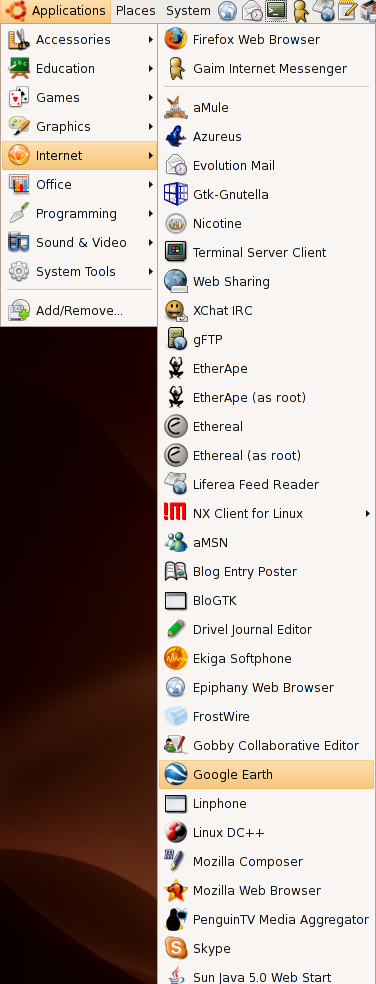 Yeah, I've got a lot of crap installed...
 Enjoy!


