Monday, March 27, 2006

Tremulous Release Date Set

Cancel your date this Friday: The Tremulous stand-alone is coming out! (March 31st)
.... and then, when you're done cancelling your date, check out the promo video the Tremulous team has posted:
High Quality
Low Quality

(Thanks PlanetQuake!)

UPDATE: Tremulous has been released! Get it now!

Saturday, March 25, 2006

Ubuntu 6.04 Dapper Drake Preview - Part I

A few nights ago I decided to take the plunge - I finally upgrade to Dapper. The latest release of XGL and compiz which include tons of bug fixes and enhancements pushed me over the edge. I had XGL running on Breezy, but the only package for the latest version of XGL I could find didn't work, and I was too lazy to build it from scratch. So I pondered - Was it time for me to upgrade to Dapper?

Anyways, after changing my /etc/apt/sources.list file and dist-upgrading overnight, I was greeted to the usual NVIDIA driver breakage - A simple reinstall of the drivers and I was off to the races!

Here's some first impressions:

  • There's now a low-diskspace notification that pops up in the bottom-right corner of your screen when any of your partitions is getting low on space. (ie. I need to clean out my home directory...)
  • People weren't lying - The bootup speed is definitely much faster.
  • Rendering speeds - I'm not quite sure whether it's the pango improvements or what, but Firefox is definitely snappier. It doesn't lag as much when rendering pages anymore.
  • Nautilus with integrated search - I had seen screenshots of it, but thought it looked kinda ghetto. Fortunately, it's easy to use and fits in well with Nautilus when you actually use it.
  • Gstreamer 0.10 is niiiiiiiice! Seeking through songs is now smooth and continuous in Totem, Rhythmbox, Banshee, etc...
  • The new "Ubuntulooks" theme is very easy on the eyes, definitely a good move.
  • The latest XGL with compiz is incredible - Since the first release, they've both become much more stable and polished. Did I mention everything feels snappier too?
If I had to sum up my first impressions of Dapper in one line, it'd be this: Dapper Drake is going to be one snazzy OS.

I'll post more as I find out neat stuff. (Screenies too!)
:)

Monday, March 20, 2006

Next-Gen Linux Game Roundup

If you thought the Linux gaming world consisted of nethack, pp-racer, BZFlag, and well... fortune, you were wrong. Here's some next-gen Linux games that'll definitely make some waves:

TA Spring

I used to be fairly into Total Annihilation back in the day. It was one of the last real-time strategy games that I really spent a lot of time with. Well, someone has created a fully 3D RTS engine who's current goal is to run the content from Total Annihilation. In other words, it's a 3D remake of TA, but it also has the capability to run brand-new content and serve as an engine for new RTS games. The first major release of the Linux port was made a few weeks ago, so be sure to give it a whirl!

Just look at these screenshots.


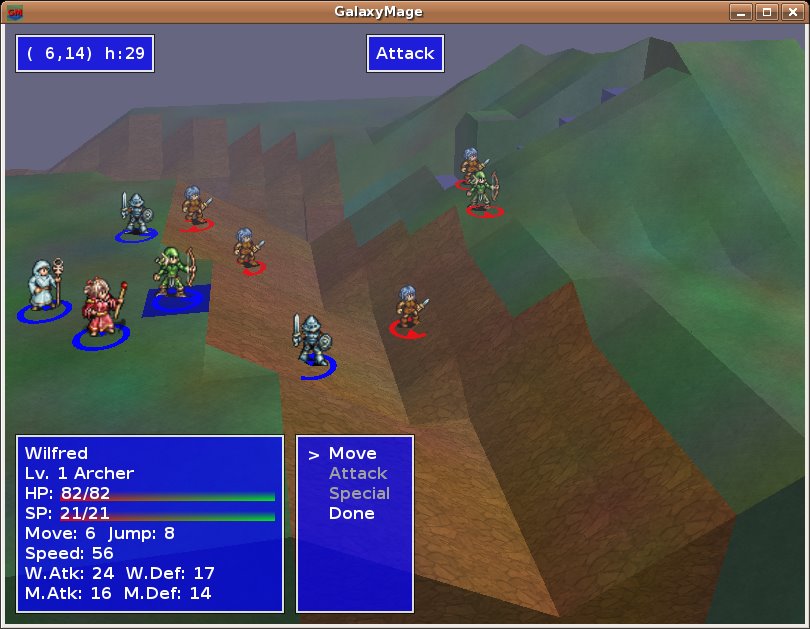
GalaxyMage

GalaxyMage is a turn-based 3D tactical RPG game (oops, "role-playing game game" - thanks for the correction) that's looking awfully cool, awfully fast.

Why does it rock?
  1. It's developing quickly yet it already feels polished.
  2. It's got a cool and unique genre.
  3. From the development team: "Our goal is to make GalaxyMage a game that is relatively simple to pick up and play"
  4. The lead developer knows what he's doing. (eg. He originally used place-holder art from Wesnoth for the units until things got off the ground a bit - good call - and also the scope of the game doesn't seem too large - another good call.)
This game is one of those games that just feels good, and it's already really fun to play. Definitely give this one a shot sooner or later. You can check out some more screenshots here.


Sauerbraten

Sauerbraten is the next-generation Cube engine/game. It features some funky realtime geometry editing, single and multiplayer action, and a pretty big user community. Personally, I'm not a huge fan of the game so far, but the engine can do some neat things and I'm optimistic that the community will give this next-gen game some next-gen gameplay.

Here, have some screenshots.


Ecksdee

Ecksdee is a futuristic racing game that's kinda reminiscent of Wipeout. It's very early in development but is already one to keep an eye on because it's using a pre-built game engine (Crystal Space), which means it has a better chance of progressing quicker. In general, using an engine such as Crystal Space allows developers to focus more on content rather than spending tons of time building an engine of their own. Also, Ecksdee is unique because it uses Nvidia's Cg shading language, so expect some pretty good eye-candy in the future.


Tremulous

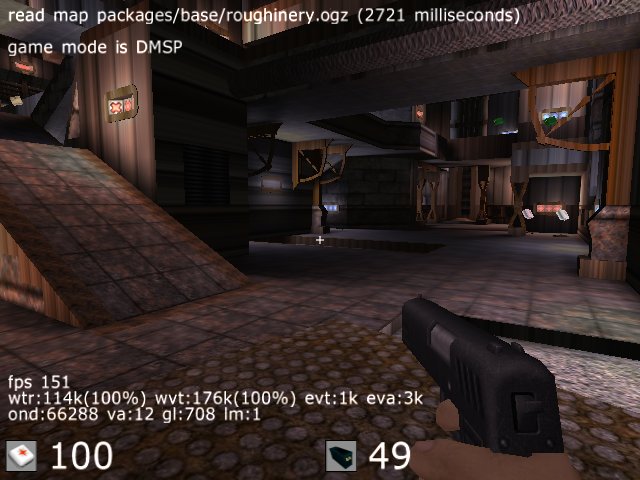
A long time ago, in a galaxy far far away, there was a Quake II mod called "Gloom". It was based around a simple concept: An alien team and a human team duked it out in a map and have to destroy each others' bases. However appealing this may have sounded though, Gloom never experienced massive popularity because of it's incredibly steep and frustrating learning curve. Several elements of the gameplay make it very difficult for newcomers to play, and on top of that, there's hundreds of maps to learn. Gloom is still played today, but only by a relatively small group of dedicated players. (That being said, there's people playing the game 24/7.)

Now, fast forward to 2005. An incredibly talented (and well organized) team of developers releases a Quake 3 mod titled "Tremulous". It's based on the same Aliens vs. Humans/base building concept, but in every area where Gloom failed, Tremulous succeeds. To start, the game is much easier to tackle for newcomers. The mod ships with the right number of maps, and they're all extremely polished and well balanced. There's dozens of really cool features such as the Human team's jetpack (which you'd never think they could make work balance-wise, but they did), the Aliens' ability to walk on walls, and so on. For a few months after its release, the Tremulous community grew and grew, but unfortunately never reached critical mass and eventually started to diminish. It was truely a shame to watch, as Tremulous is an incredibly solid mod.
Fortunately, with the release of the Quake 3 source code, Tremulous is going to be re-released as a standalone game, with numerous fixes and enhancements. This is great news for Linux gamers because the community is going to get an extremely unique and enjoyable team-based FPS for free. You really have to play the game to know what I'm talking about though - There isn't a single free Linux FPS out there with as much polish as this game. Watch for it.

Glorious screenshots!


Addenum:
(Under the category of other Quake 3 mods turned standalone is Navy Seals: Covert Ops, which is another pretty good mod, and will be a great alternative to True Combat: Elite, which is the only free popular realism FPS for Linux right now.)


Automanic

Automanic is a "vehicular deathmatch game", similar to Twisted Metal. It's another title that uses Crystal Space, along with the Open Dynamics Engine (ODE), which provides it with nice vehicle physics. ODE will also hopefully help speed development on this title, as more time can be spent on developing gameplay features and less on building a physics engine.
You can find some work-in-progress screenshots over here.


Summary

If there's one thing that should be clear, it's that modern, open source, next-generation games are beginning to emerge onto the Linux desktop. The graphics in these games these games is coming back up to par with commercial titles, and exciting new open-source game engines are allowing development to proceed at an incredible pace. It's an exciting time for open-source gaming on Linux, and the rest of 2006 should bring us even more excitement.

Sunday, March 19, 2006

Linux.com GNOME 2.14 Review

Linux.com has posted their review of GNOME 2.14. It's not a terrible review by any means, but it misses some cool new features. Yes, Yelp is new and improved and there's tons of speed increases, but here's some missed features you should know about:

  • Deskbar is now a part of GNOME 2.14! Deskbar is a panel applet that's basically the mystical "type something in and I'll do what you want" field. It'll search Google, your hard disk, your documents, and everything else for whatever you type in... and it's super extensible. (Check out the Deskbar section over here for a screenshot that explains it all.)
  • Epiphany has been decked out with some nice features like bookmark tagging, integration with Liferea and other RSS feedreaders, and "zeroconf" bookmarks (the ability to share/browse shared bookmarks on a local network without any configuration.) Epiphany also still goes easy on your RAM (unlike FireFox). Check out some more Epiphany goodness here.
  • Mad gedit improvements. Check out the "Better editor" section here.
  • GStreamer 0.10 - Finally GStreamer's gotten the stability and versatility that's been the goal all along. To the end user, you're going to notice better/instant video seeking in Totem, and should see other GStreamer 0.10 based apps behaving nicer too. For the technologically inclined, this is a good read to get a better idea of the possibilities.
I'm sure there's other improvements worth mentioning too - Feel free to post a comment if there's any particular ones you think need mentioning!

Saturday, March 11, 2006

GIMP Fork?

NewsForge has an interesting article on how it might be time to start a fork of the GIMP... The GIMP is Linux's (and the rest of the free software world's) defacto image manipulation program. It's features rival those of Adobe Photoshop in many areas, but as the article says, it's interface just isn't quite there.

I've wondered why the UI has never really changed, and they shed some light on the answer to that question in the article. Check it out!

Thursday, March 09, 2006

GCC Security Updates - Ohhh the Irony...

Ubuntu's update notifier just told me about a security update for the GCC package:


* gpc SECURITY UPDATE: Fix arbitrary code execution with crafted
pascal source files.


A compiler doing arbitrary code execution?
The irony. :)

Monday, February 27, 2006

CosmoPOD - Free Remote KDE Desktop

NoMachine is an extremely cool piece of technology. It's like VNC on steroids, but it's much much more. The software allows you to connect to a remote machine (which is running an NX server), login with your normal user account, and be presented with a brand new remote desktop. Top this with very good speed/latency, remote audio playback, remote printing/file sharing, and you've got a winner. How do you get in on this geeky goodness? If you want to run a NoMachine server on your PC at home, you've got two options: Buy a license for the NoMachine Linux server, or try the GPLed FreeNX server.

Now, say you don't have a Linux machine of your own, or you simply don't want to go through the hassle of setting up your own NX server. Enter CosmoPOD.

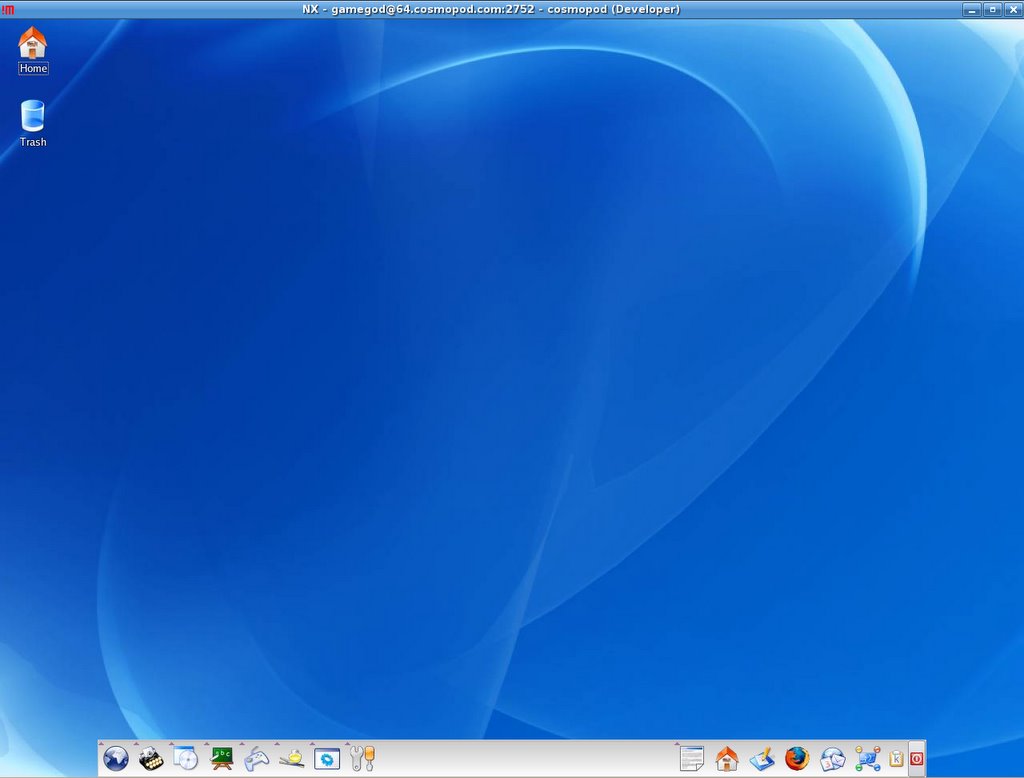
CosmoPOD is a free service that gives you access to a remote KDE desktop, which you can use for pretty much anything you want.
I decided to give CosmoPOD a try, and while I personally don't find the service overly useful, I'm sure there are others that will.

Before I had even logged onto my CosmoPOD desktop for the first time, here were some of my initial thoughts:

  • Your account password can only be lowercase letters and numbers - Odd...
  • There's a nice .deb package of nxclient :)
  • The nxclient package strangely creates a subfolder in your "Internet" folder in GNOME's applications menu.
  • After you install the NX client, the ".nxs" files (saved connection settings) that you're supposed to double-click on to connect to a server aren't associated with the NX client. (Double clicking on them in GNOME does nothing...) It's an oversight on No Machine's fault as well as CosmoPOD's for not mentioning it.
  • To connect to CosmoPOD, I ended up putting their provided "cosmopod.nxs" file in my ~/.nx folder.
Minor quibbles aside (which may not have appeared if I was using KDE instead of GNOME on my own PC), I connected to CosmoPOD through NX for the first time.
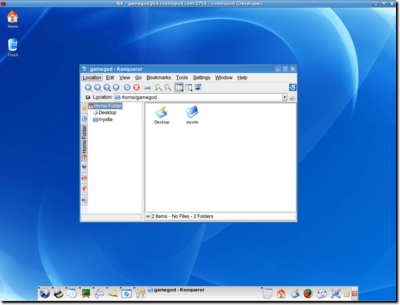
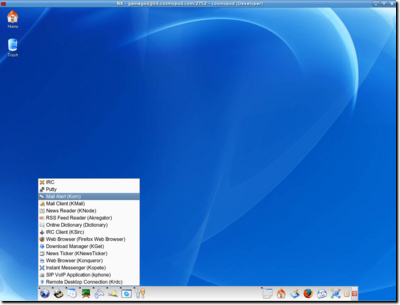

I was greeted with a customized KDE desktop, which had launchers to everything they'd let you use in the kicker (the KDE bar at the bottom of the screen).
Here are some of the apps they provide:
  • Firefox (the homepage is set to some shopping page... CosmoPOD is advertising supported after all)
  • OpenOffice 2.0
  • Kopete 0.11.1
  • KDE 3.5.1
  • ... and a bunch of others (read: tons of KDE apps)
With your CosmoPOD account, you also get a free email account and 1 GB of storage.
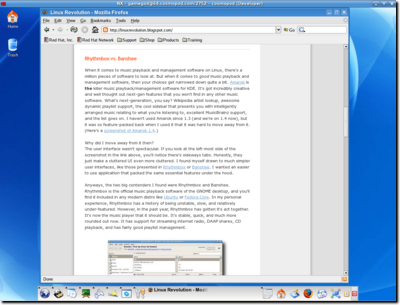

CosmoPOD seems like a neat, free service, though if you have your own Linux box, you might find it more useful to just set up your own private NX server. (It's not that tricky to do...)
Regardless, I'm sure people will come up with creative things to do with CosmoPOD. Feel free to leave a comment if you can think of some!

Useful links:

Sunday, February 19, 2006

Mac Apps on Linux?

The WINE project is an "Open Source implementation of the Windows API on top of X and UNIX". In layman's terms, it means it lets you run Windows programs on Linux. In my personal opinion, I would say this project is a wild success, especially with the advancements made to it in the last year.

With the release of Apple's OS X for Intel x86-based processors, OS X applications are being released in a different "format" to run on these new processors. After reading about this many times, a thought occurred to me: x86 executables (programs) instead of PowerPC (the old processor type) executables means that if one wanted to hypothetically try to run OS X applications on Linux, it would no longer require an emulator. Then it occurred to me.

I might be wrong, but I believe it should now be possible to implement an OS X API on top of UNIX, exactly like what WINE did to the Windows API.

Sure, OS X applications are in a different non-ELF (non-Linux) binary format, but neither are Windows apps. Can anyone think of any real reasons why this shouldn't be possible now? (Again, I might be wrong, but some of the GNUStep APIs might be re-usable in a project like this...)
Granted, it would definitely need an enormous effort, but it would be absolutely incredible if Linux could run both Windows and OS X apps.

(And for those who are confused, this is approach is totally different from that of Mac-on-Linux or VMWare, which are both emulators*. This approach would have top-notch speed and wouldn't need a copy of OS X to work.)

Thoughts anyone?
(Please leave a comment...) :)

*I stand corrected (see the comments), both are virtualizers.